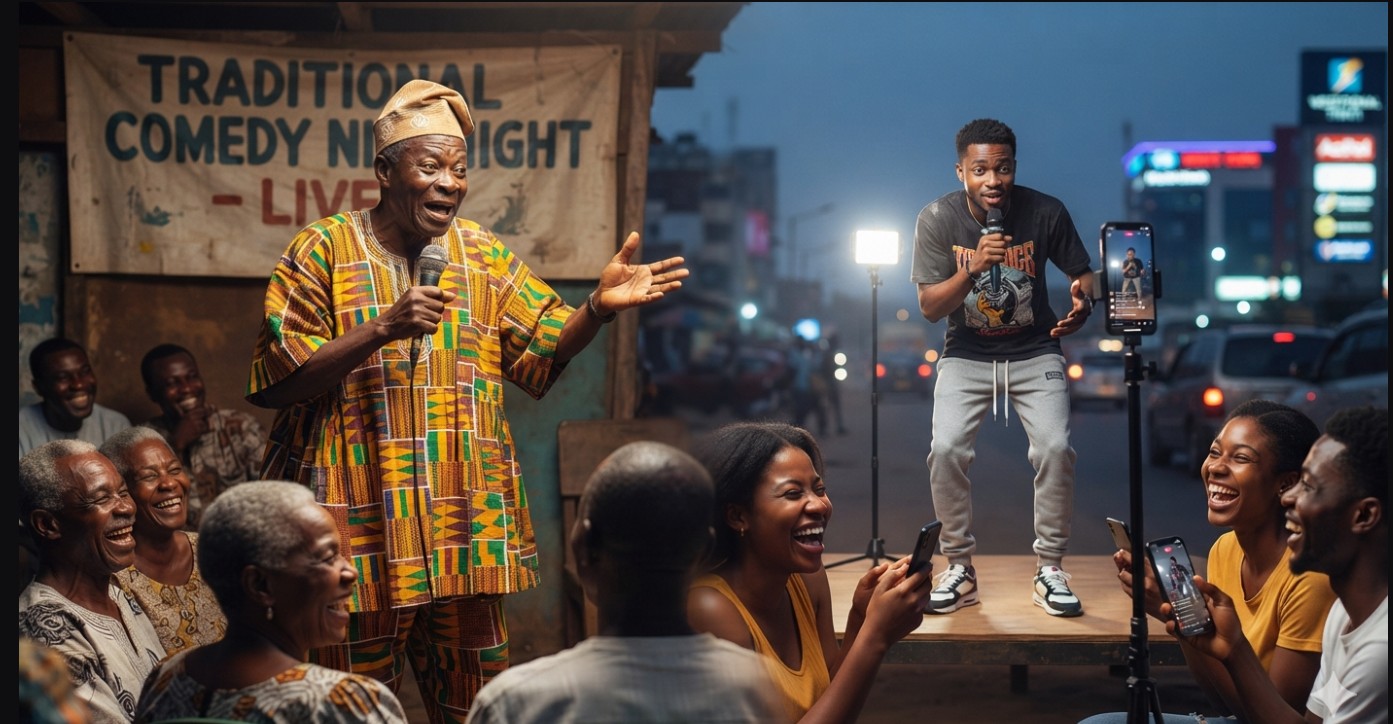
For nearly two decades, Ghana and Nigeria stood as the comedy capitals of Africa. Household names like Basketmouth, AY, Bovi, DKB, Clemento Suarez, and CJ Bigjoe commanded stages and screens with ease. A single skit could dominate YouTube trends, while comedy concerts filled the Eko Hotel Convention Centre or Ghana’s National Theatre to capacity.
But the tide has shifted. Views are down. Engagement has plateaued. Brand endorsements and stadium‑sized shows are no longer guaranteed. The once‑untouchable reign of traditional comedians is fading, and the entertainment ecosystem is recalibrating.
So, what’s driving this decline—and what lessons should creators and investors take from it?
The Anatomy of the Decline
The fading of the traditional comedy star is less about talent and more about adaptation. Four forces stand out:
1. The Attention Economy Has Shifted
Long‑form sketches that once thrived on YouTube now struggle against the dominance of TikTok, Instagram Reels, and YouTube Shorts. Audiences expect punchlines in under 30 seconds. Traditional comedians, trained to build arcs over minutes, often lose viewers before the payoff.
2. The Democratization of “Funny”
Barriers to entry have collapsed. A teenager with a smartphone and a relatable take on everyday life can go viral overnight. Audiences now prefer raw authenticity from multiple micro‑creators over polished but predictable veterans.
3. Creative Stagnation and Fatigue
Recycled tropes—especially exaggerated cross‑dressing characters—once delivered quick laughs but now feel repetitive. Audiences matured, demanding sharper writing and fresher perspectives. When the gimmicks wore thin, engagement followed.
4. The Monetization Crunch
Low YouTube CPMs in West Africa meant comedians relied heavily on brand deals. As views declined, brands shifted focus. Facebook monetization, once a lifeline, became unreliable with inconsistent payouts and reduced RPMs. The ad‑revenue model collapsed under its own weight.
Lessons for Creators
To thrive in this new era, comedians and creators must pivot strategically:
- Micro‑Content as a Funnel: Treat TikTok and Reels as gateways to premium platforms—YouTube, Patreon, or live shows. Short clips should drive audiences toward deeper engagement.
- Authenticity Over Characters: Audiences connect with personalities, not just scripts. Transition from “sketch actor” to cultural commentator or lifestyle storyteller.
- Diversify Revenue Streams: Move beyond AdSense. Explore merchandise, ticketed live events, digital courses, and subscription models.
- Community Over Vanity Metrics: Ten thousand loyal fans are more valuable than a million passive viewers. Build intimacy through replies, live Q&As, and direct engagement.
Lessons for Investors
For investors and brand managers, the decline of the superstar comedian signals a new frontier:
- Bet on Studios, Not Individuals: Invest in collectives or digital studios that manage multiple mid‑tier creators. Diversification reduces risk and amplifies reach.
- Fund Infrastructure: Agencies offering legal, financial, and brand‑deal support for micro‑creators will become the backbone of the next comedy wave.
- Prioritize Live Experiences: Scarcity is physical. Curated comedy nights in Accra or Lagos can deliver consistent ROI compared to volatile digital campaigns.
- Integration Over Interruption: Brands should embed products naturally into creators’ lifestyles rather than forcing awkward ad placements. Authenticity drives conversions.
The Final Takeaway
Comedy in Ghana and Nigeria isn’t dying—it’s evolving. What’s fading is the archetype of the untouchable comedy star who thrived simply by being first with a camera.
The future belongs to creators who embrace speed, authenticity, and community, and to investors who build ecosystems rather than chase one‑off stars. Those who adapt will usher in comedy’s next golden era. Those who don’t will be left buffering.