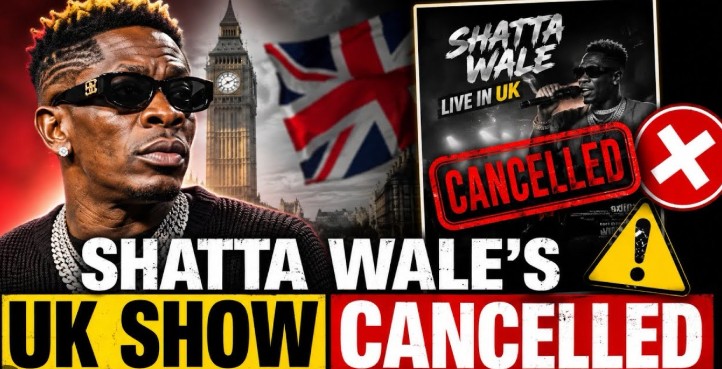
The recent Shatta Wale UK show controversy is about much more than one artist, one promoter, or one night.
It is a reminder that African music has officially gone global, but the business infrastructure supporting that music must now operate at a global standard.
When the raw, energetic “Street King” culture of Accra meets the structured corporate environment of London, friction can happen. But when that friction results in cancellations, security concerns, financial disputes, and disappointed fans, the industry has to pause and ask a bigger question:
What can we learn from what happened?
This is not about taking sides. It is about understanding the responsibilities of everyone involved in the live entertainment ecosystem: artists, management teams, promoters, venues, authorities, fans, and the media.
What Really Happened?
The Shatta Wale UK show was expected to be another major milestone for the Ghanaian superstar and his enormous UK fan base.
However, somewhere between the planning stage and the moment the artist was expected to take the stage, things went wrong.
While the public may never have access to every clause in the private contracts or every conversation between the parties, the fallout exposed what appears to have been a breakdown around several critical areas, including logistics, production requirements, communication, financial expectations, and event management.
The result was predictable.
Claims and counterclaims began circulating across social media. The artist’s side raised concerns about production standards and whether the agreed requirements had been properly met. The promoter’s side faced questions about expectations, costs, demands, and the overall organisation of the event.
And, once again, the people caught in the middle were the fans.
People had purchased tickets. They had travelled. They had made plans. They expected entertainment.
Instead, they were confronted with uncertainty and frustration.
When communication breaks down at a major event, the situation can quickly move beyond entertainment and become a public safety issue. That is when venues, promoters, artists, security agencies, and authorities all have a responsibility to act quickly and professionally.
Ultimately, when a major show collapses, nobody really wins.
Lesson One: For the Artist, Structure Protects Talent
Shatta Wale is an undeniable force in African music.
His brand, fan base, catalogue, personality, and ability to command attention have made him one of Ghana’s most recognisable entertainment figures.
But international markets operate differently.
Talent can open the door, but professional structure keeps the door open.
Major international performances require more than an artist and a microphone. They involve contracts, technical riders, production specifications, insurance, immigration requirements, venue regulations, transportation, accommodation, security, stage management, payment schedules, rehearsals, and contingency planning.
This is where strong management becomes essential.
The Takeaway
Artists operating internationally need professional teams and representatives who understand the markets they are entering.
Technical requirements should be documented.
Financial obligations should be clearly defined.
Contracts should establish responsibilities.
Disputes should have clear resolution mechanisms.
And communication should happen through the appropriate professional channels.
Social media may be useful for communicating with fans, but it should not become the primary courtroom for business disputes.
An emotional post may generate millions of views today, but it can also create unnecessary damage tomorrow.
The bigger the artist becomes, the more professional the structure around that artist must become.
The music can be loud.
The business must be disciplined.
Lesson Two: For the Promoter, Transparency Is Your Currency
Promoters carry enormous responsibility.
They are responsible for convincing audiences to spend money, convincing artists to trust them, securing venues, coordinating suppliers, managing production, dealing with authorities, handling finances, and delivering the experience that was advertised.
That is not a small job.
One of the biggest problems in entertainment is the temptation to announce a major show before every important detail has been secured.
The poster goes online.
Tickets go on sale.
The hype begins.
But behind the scenes, negotiations may still be taking place.
That is risky.
The Takeaway
Do not announce what you cannot confidently deliver.
If an artist has specific technical requirements, confirm them before promoting the event.
If there are financial conditions that must be satisfied, resolve them before the public announcement.
If the venue cannot accommodate the required production, find another venue.
If there is uncertainty about whether the artist will perform, do not allow thousands of people to purchase tickets based on assumptions.
A promoter’s greatest asset is not a venue.
It is not a celebrity.
It is credibility.
Once fans stop trusting a promoter, rebuilding that trust becomes extremely difficult.
Lesson Three: Fans Are Not Just Customers
The public is often treated as the final part of the entertainment chain.
In reality, fans are the foundation of the entire industry.
Without them, there are no ticket sales, no streaming numbers, no merchandise sales, no sponsorship value, and ultimately no entertainment business.
Yet when events collapse, fans are frequently the people who absorb the greatest consequences.
They lose money.
They lose time.
They may travel long distances.
Some take time off work.
Others book accommodation and transportation.
Some even bring children or family members to events.
The Takeaway
Being a fan should not mean accepting poor business practices.
Fans have every right to demand:
- Clear event information
- Honest communication
- Professional customer service
- Clear cancellation policies
- Transparent refund procedures
- Safe venues
- Accurate advertising
Supporting an artist does not mean defending every decision made by the artist’s team.
True fandom should include demanding better standards from the entire industry.
We should want our favourite artists to perform under conditions that protect their reputation, their safety, and their fans.
Lesson Four: Venues and Authorities Must Plan for Failure
Every major event needs a contingency plan.
It is not enough to prepare for a successful show.
Organisers must also prepare for what happens if the show cannot go ahead.
What happens if the artist does not arrive?
What happens if the production equipment fails?
What happens if there is a financial dispute?
What happens if the venue becomes unsafe?
What happens if thousands of disappointed fans are already outside?
These questions should be answered before the event begins.
The Takeaway
Venues, promoters, security companies, police, and local authorities need clear emergency and cancellation procedures.
If an event is likely to be cancelled, communication should happen as early as realistically possible.
Fans should not have to arrive at a venue before discovering that something has gone seriously wrong.
A disappointed audience can be managed.
An angry, confused crowd with no information is much more difficult to manage.
Communication is a safety tool.
Lesson Five: The Media Must Choose Responsibility Over Clicks
Entertainment controversies are perfect fuel for social media.
One video can generate millions of views.
One headline can dominate the conversation.
One unverified claim can be repeated thousands of times before anyone checks whether it is true.
This creates another problem.
During a controversy, the public often receives fragments rather than facts.
One side speaks.
The other side responds.
Bloggers publish.
Influencers react.
Fans choose sides.
And before the full story is understood, the internet has already reached a verdict.
The Takeaway
Entertainment media has a responsibility to verify information before publishing it as fact.
There is nothing wrong with reporting controversy.
There is everything wrong with deliberately making a controversy worse for clicks.
Responsible entertainment journalism should ask:
What do we know?
What has been confirmed?
What is alleged?
Who has been given an opportunity to respond?
What information is still missing?
The African entertainment industry needs media platforms that build the industry, not platforms that profit from its confusion.
The Bigger Problem: African Entertainment Is Growing Faster Than Its Infrastructure
This may be the most important lesson of all.
African music is no longer operating only within African borders.
Ghanaian, Nigerian, South African, Congolese, Ivorian, and other African artists are performing across Europe, North America, Asia, and the Middle East.
The audiences are growing.
The venues are getting bigger.
The fees are getting higher.
The brands are becoming more interested.
The global attention is increasing.
But the systems supporting this growth have not always developed at the same speed.
We need stronger:
- Artist management companies
- International booking agencies
- Entertainment lawyers
- Tour managers
- Production managers
- Event insurance systems
- Promoter accreditation
- Venue partnerships
- Artist technical teams
- Contract enforcement mechanisms
- Professional event communication systems
Going global requires more than global music.
It requires global standards.
The Way Forward
The solution is not to blame artists.
It is not to blame promoters.
It is not to blame fans.
And it is certainly not to turn every disagreement into an online war.
The solution is to build better systems.
Artists must become more professionally managed.
Promoters must become more transparent.
Fans must become more informed and demanding.
Venues must strengthen event protocols.
Authorities must ensure appropriate safety planning.
And the media must become more responsible.
There should also be stronger professional relationships between African entertainment companies and their international counterparts.
Imagine a system where an African artist travelling to the UK already has:
- A verified promoter.
- A professionally reviewed contract.
- A confirmed technical rider.
- A production manager.
- Event insurance.
- A clear payment schedule.
- A venue inspection.
- A security plan.
- A cancellation procedure.
- A communication strategy for fans.
That is how the industry moves from hype to infrastructure.
The Bottom Line
The Shatta Wale UK controversy should not simply become another social media battle that disappears after a few days.
It should become a conversation about the future of African entertainment.
African music is too valuable to be undermined by poor planning, weak communication, unclear contracts, or inadequate professional structures.
We cannot demand that the world respect our music while refusing to build the systems required to support it.
The global stage demands global standards.
The goal should always be simple:
A properly organised show.
A safe environment.
A satisfied audience.
A protected artist.
A respected promoter.
And a stronger African entertainment industry when the lights go off.
The real victory is not simply selling out the venue.
The real victory is delivering what was promised.
And perhaps that is the biggest lesson from the Shatta Wale UK controversy:
African music has already gone global.
Now the business must catch up.