In the fast-paced world of Afrobeats, narratives surrounding female unity—or the lack thereof—often dominate the headlines. Recently, comments attributed to Nigerian superstar Tiwa Savage regarding her collaborations with Ghanaian vocal powerhouses Efya and Becca have reignited a fierce debate.
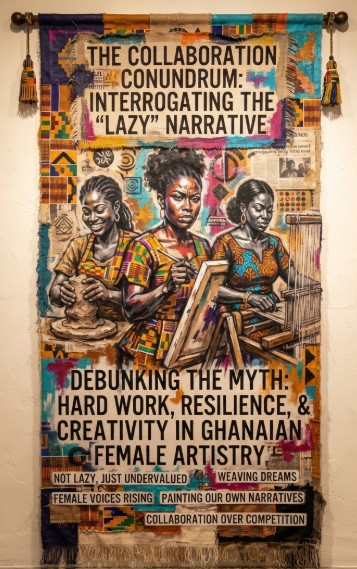
Is there a lack of promotional synergy among Africa’s leading women? And more controversially, is the “lazy” tag currently being slapped on Ghanaian female artists justified? Let’s dive into the facts and interrogate the claims.
The Tiwa Savage Factor: A Case of Silent Promotion?
The discourse began with reports of Tiwa Savage expressing frustration over the promotion of her cross-border collaborations. Tiwa has historically worked with Efya (“The Vibe”) and Becca (“Yes I Do”).
The Veracity: While Tiwa Savage has long been an advocate for female collaboration, she has hinted in interviews—most notably during her Celia album press runs—at the logistical and ego-driven hurdles that prevent female collaborations from reaching their full potential. The specific claim that Efya and Becca failed to promote their joint works reflects a recurring theme in the industry: the “silo effect.”
In the music business, a feature is only as strong as its marketing. When a guest artist fails to post, tweet, or perform the song, it creates a vacuum. For Tiwa Savage, whose brand is built on intentionality, the perceived lack of reciprocity from her Ghanaian counterparts has been cited as a reason for her selective approach to female features.
Is “Laziness” the Real Issue?
The claim that Ghanaian female artists are “lazy” is a heavy accusation that requires nuance. To label an entire sector of an industry as lazy overlooks systemic barriers—such as limited funding, smaller market size compared to Nigeria, and patriarchal gatekeeping—that female acts face in Ghana.
However, the “output” argument is where critics find their ammunition. In a digital age where visibility is currency, a drop in consistency is often mistaken for a lack of effort.
The Gyakie Paradox: Success vs. Sustainability
The suggestion that Gyakie is an example of “laziness” is, by most metrics, factually strained.
- The Reality: Gyakie achieved what few Ghanaian artists (male or female) have: a certified continental hit with “Forever.” She has graced the stage at the Grammy Museum, performed at international festivals, and maintains millions of streams.
- The Interrogation: The criticism leveled at Gyakie likely stems from the “post-breakout lull.” After a massive global hit, the pressure to replicate that success is immense. While her release frequency may have slowed compared to her debut era, calling the “Songbird” lazy ignores the strategic positioning required for international touring and brand partnerships.
The “Wendy Shay” Standard: The Hardest Working Woman in Ghana?
The claim that Wendy Shay is currently the only hardworking female artist in Ghana is bold but not baseless.
Since her debut, Wendy Shay has maintained a relentless release schedule, a consistent social media presence, and an ability to stay at the center of the cultural conversation. Whether through controversy or chart-topping singles like “Survivor,” Shay possesses a “hustle” mentality that mirrors the Nigerian industry model—constant visibility and unapologetic branding.
By comparing Shay’s work rate to her peers, it becomes clear why she is often singled out. She treats the music industry like a 24-hour job, a trait essential for survival in the modern Afrobeats landscape.
The Bigger Picture: Industry or Individual?
The friction between Tiwa Savage and her Ghanaian colleagues, and the criticism of artists like Gyakie, points to a larger structural issue:
- Marketing Budgets: Nigerian artists often have larger machines behind them to handle promotion. What looks like “laziness” in Ghana may actually be a lack of a promotional budget.
- Unity as Strategy: Tiwa’s point stands—female artists cannot afford to be islands. If a collaboration happens, the promotion must be mutual for the “Female Afrobeats” brand to compete with the men.
- Consistency is King: In the streaming era, out of sight is out of mind. Wendy Shay’s success proves that staying active is just as important as being talented.
Final Thoughts
While the “lazy” label is an unfair generalization, the critique of Efya and Becca’s promotional efforts highlights a missed opportunity for cross-border synergy. Ghanaian female artists possess world-class talent, but talent without aggressive, consistent marketing is a silent engine.
Gyakie remains a global force, but the bar set by Wendy Shay’s work ethic is the new standard for anyone looking to dominate the African charts. It is time for a shift from individual brilliance to collective industry aggression.
💬 What do you think? Is the Ghanaian music scene suffering from a lack of effort, or is it a lack of support? Share your thoughts in the comments below.