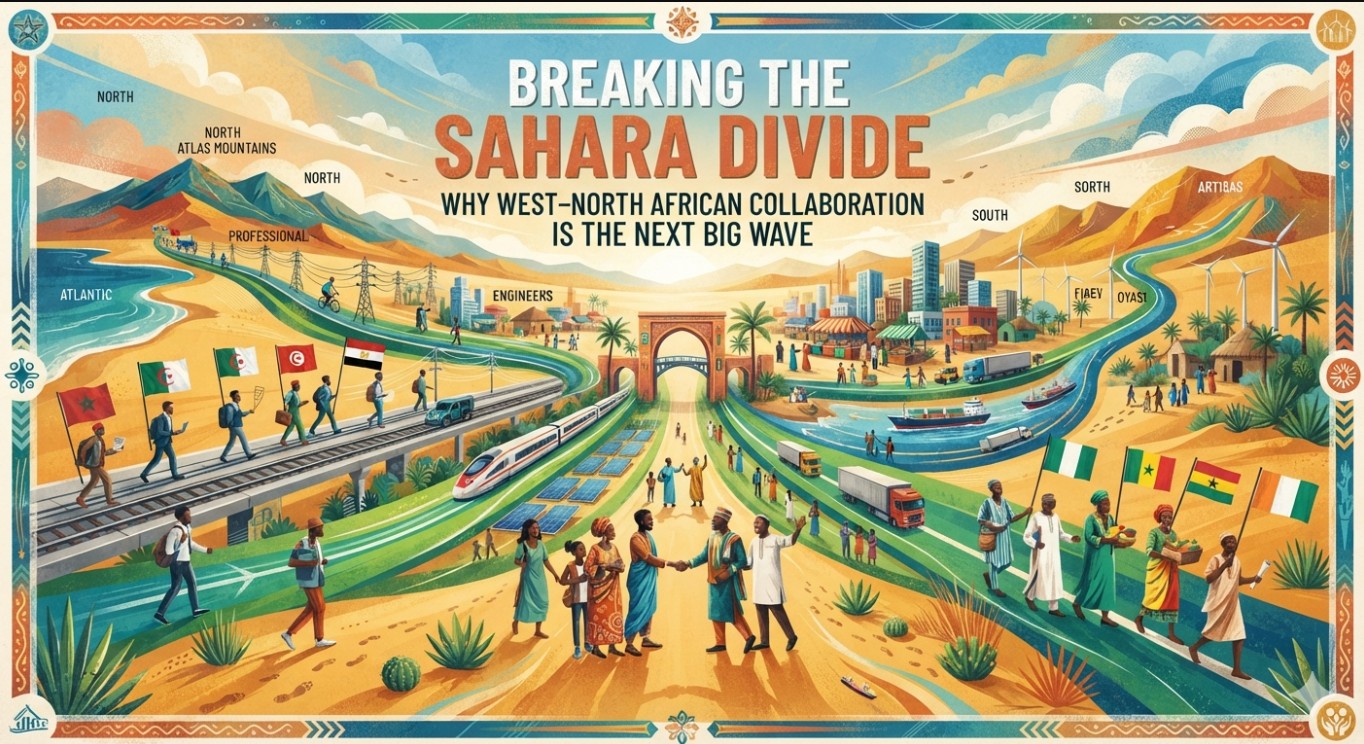
The African music landscape is undergoing what many call a “Continental Renaissance.” While West and South Africa have dominated the global conversation in recent years, the next frontier for massive growth and profitability lies in bridging the gap between Sub-Saharan Africa and the Maghreb (North Africa).
This article explores the powerhouse genres driving revenue, the barriers holding back collaboration, and a practical roadmap for upcoming artists ready to seize this opportunity.
1. The Powerhouse Genres Driving Profit
Four clusters currently dominate both charts and revenue streams:
- Afrobeats (West Africa – Nigeria/Ghana): The global standard, powered by diaspora audiences in the UK and US. Artists like Burna Boy, Wizkid, and Tems headline arenas worldwide.
- Amapiano (South Africa): The “coolest export” with hypnotic log-drum basslines infiltrating global club culture, thriving in live performances and festivals.
- Maghreb Trap & Drill (North Africa – Morocco/Algeria/Tunisia): Artists such as ElGrandeToto and Soolking rival Western stars in streaming numbers, fueled by reach into the Middle East and diaspora in France and Spain.
- Mahraganat/Egyptian Pop (North Africa – Egypt): A streaming powerhouse. Artists like Wegz thrive in a domestic market so large that success at home alone can generate millions.
2. Why West–North Collaborations Are Rare
Despite sharing a continent, West and North Africa operate in different cultural orbits:
- Language Barriers: English, French, and Pidgin dominate the West; Arabic, Darija, and French dominate the North.
- Market Orientation: West African artists look to London and New York; North African artists look to Paris, Marseille, and Dubai.
- Algorithmic Silos: DSPs categorize North Africa under “MENA” and West Africa under “Sub-Saharan Africa,” limiting playlist overlap.
- Cultural Identity: The lingering “Sahara Divide” sees North Africa often identifying with the Arab world, while Sub-Saharan Africa views the North as “Middle Eastern.”
3. Why Collaboration Is a Goldmine
For upcoming artists, this is a Blue Ocean Strategy—a market with little competition:
- Market Scaling: A Nigerian–Moroccan collaboration taps into the MENA market of 400+ million people.
- Sonic Innovation: Fusing Afrobeats rhythms with Arabic scales (Maqam) creates fresh sounds for global audiences.
- Touring Circuits: Opens the “Mediterranean Circuit,” connecting Lagos, Accra, Casablanca, and Cairo.
- Data Dominance: Cross-regional features trigger algorithms in both markets, doubling visibility.
4. Benefits for Upcoming Artists
- Lower Competition: Few are targeting Wegz (Egypt) or Dizzy DROS (Morocco), compared to the crowded Afrobeats feature market.
- Shared Diaspora: Millions of North and West Africans live side-by-side in Paris, Brussels, and Madrid—collaborations resonate instantly.
- Cost-Effectiveness: Cross-regional collabs often prioritize mutual growth over high feature fees.
5. Roadmap to a Successful West–North Collab
Step 1: Strategic Selection (A&R) Target artists with French or Afro-fusion leanings. Focus on Morocco (Rap/Trap), Algeria (Raï/Pop fusion), or Egypt (Electronic/Mahraganat).
Step 2: The Sonic Bridge Blend West African percussion (congas, talking drums) with North African instruments (Oud, Ney flute). Aim for 100–110 BPM to suit both Afrobeats and Maghreb pop.
Step 3: Bilingual Marketing Use hooks with simple Arabic/English or Franglais phrases. Visuals should merge desert aesthetics with Lagos street style.
Step 4: Digital Strategy & DSPs Pitch as “Pan-African Fusion” to secure placement in both African and MENA playlists. Drive TikTok challenges mixing Amapiano moves with North African claps.
Step 5: Festival Leverage Perform at major festivals like Morocco’s Mawazine Festival alongside Lagos shows to cement credibility.
Conclusion
The “Sahara Divide” is less a cultural wall than a business barrier waiting to be broken. The first wave of artists to bridge West African rhythm with North African melody will not only dominate streaming but also unify two of the continent’s largest consumer markets.
The next African global superstars will be those who dare to connect Lagos to Casablanca, Accra to Cairo.